
Language Models Expose How We Think
Language models are not human minds, but they reveal how much of our thinking, self-talk and social behaviour is shaped by language.
The Mirror Speaks Back
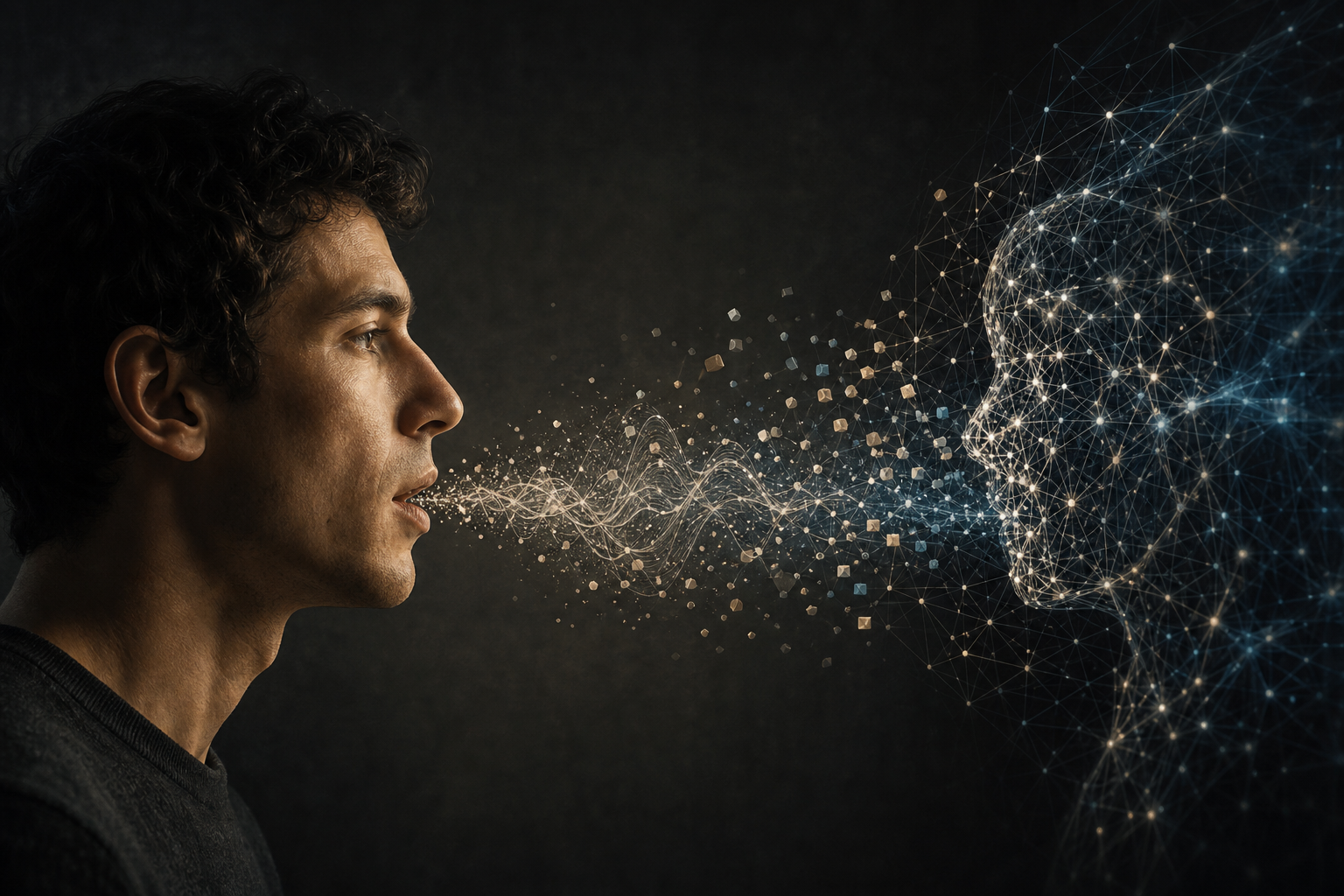
Large language models are often called next-token predictors. That is true, but it can hide the important part. These systems can imitate explanation, planning, apology and confidence with startling ease. The uncomfortable question is not only what they lack. It is how much human thought also happens through learned patterns of language.
This does not make humans into software or language models into people. Humans have bodies, memories, pain and consequences. We must live with what we say. But language gives us an internal tool: we can talk to ourselves, rehearse a future, defend a choice or question our own story. LLMs feel uncanny because they expose this linguistic layer of the mind.
The machine writes, and we recognize a family resemblance.
Trained by the World
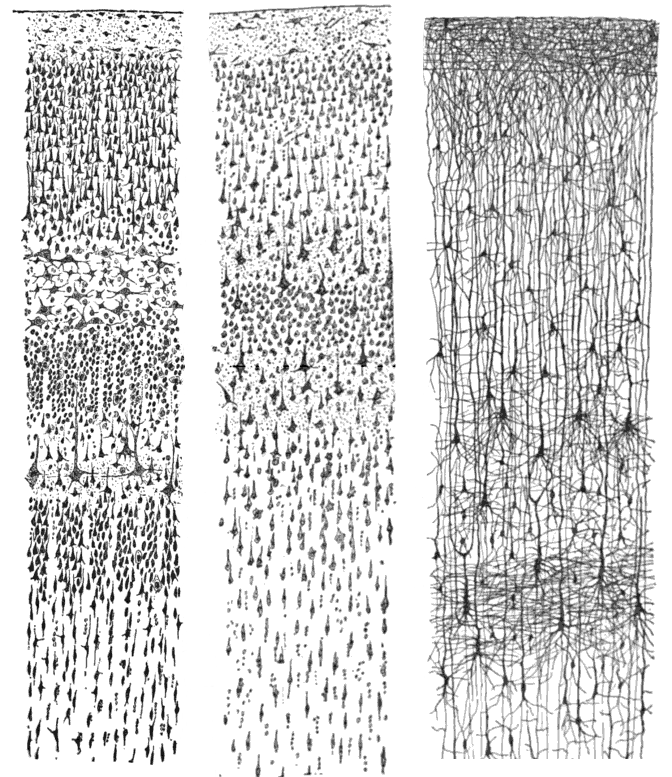

The brain is a biological neural network trained by a far richer world than any text dataset. We learn from touch, faces, fear, play and repetition. Families, schools and cultures teach us what earns approval, what sounds dangerous and what counts as normal. The body adds its own lessons through hunger, fatigue, pleasure and pain.
In that broad sense, every person becomes a predictive model. We learn what tends to follow what, then use those expectations to act. No two people receive the same training. A life shaped by music, war, neglect or scientific discipline produces different defaults.
Language is not the whole mind. We also think in images, movements, sounds and bodily skill. But language compresses experience into a form we can store, revise and give to someone else. It turns experience into memory, promise, explanation and plan.
Language Builds an Inner Room


At first, language is social. Children hear questions, warnings and praise, then answer, imitate and speak aloud while playing. Over time, some of that speech becomes private. Outer speech turns into inner speech.
That inner voice is never entirely private. It carries traces of parents, friends, teachers, books and institutions. We learn to say “I” with material supplied by other people. This is not a reason to dismiss human originality. It is a reminder that the self develops in conversation before it can reflect alone.
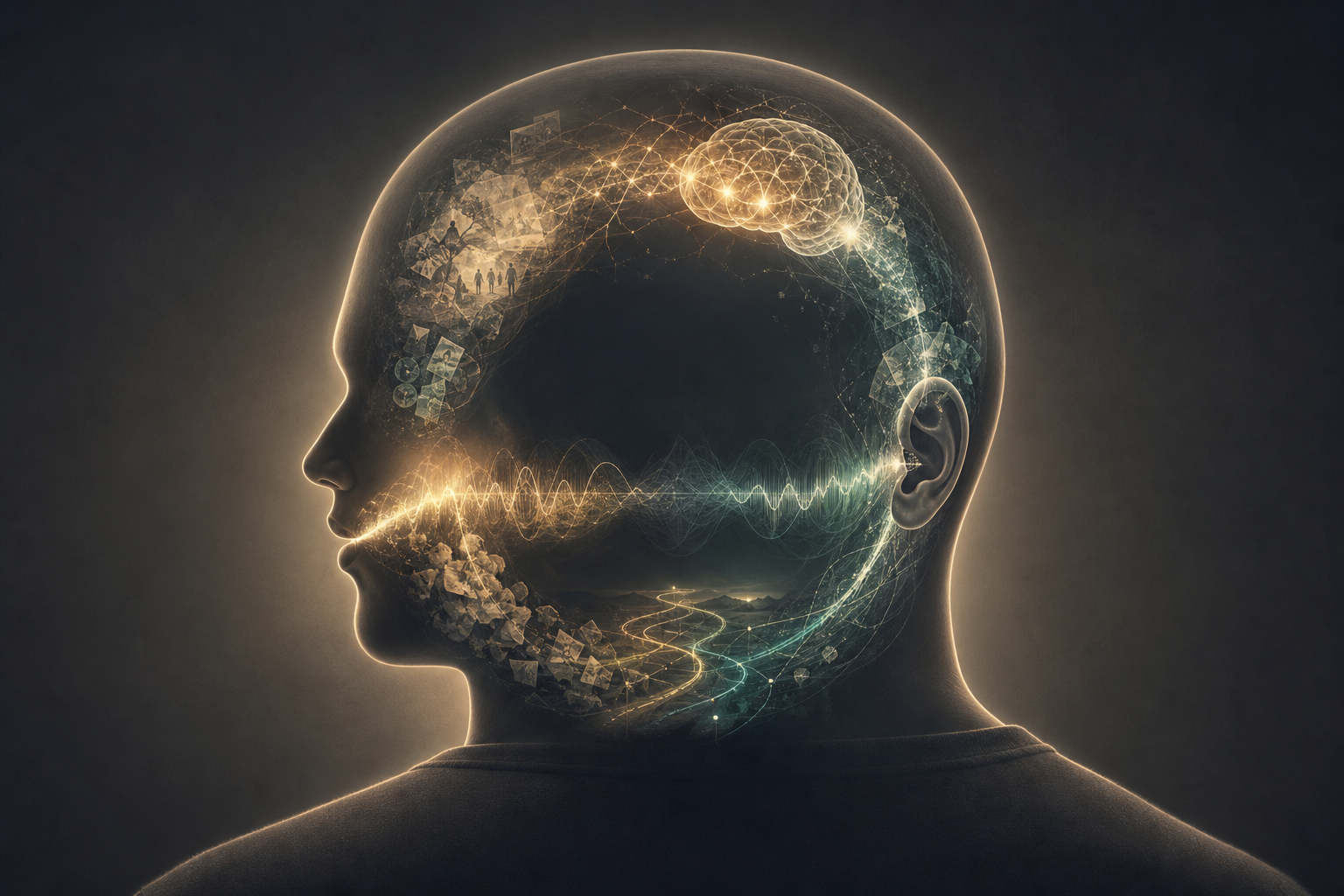
Inner speech lets a person become both speaker and listener. We can silently test a difficult sentence, imagine an objection or rehearse an apology. A human brain does not work like an LLM, but verbal thought often has a similar rhythm: context produces a possible next phrase, and that phrase changes what comes next. Repeated self-talk is therefore more than commentary. It trains attention and expectation.
A Mirror Made of Probability

_-_Google_Art_Project_-_edited.jpg)
Languages do more than label the world. They train attention. A profession, family or community supplies shortcuts for what matters, what is shameful and what counts as evidence. Human language is not one operating system. It is a changing family of systems, patched by argument and damaged by propaganda.
Language models are trained on the traces we leave behind: stories, manuals, arguments, jokes and public lies. They absorb both the intelligence and the distortion in that record. When an LLM sounds recognizably human, it is not revealing an alien civilization. It is reflecting ours in compressed form.
Fluency Is Not Truth

LLMs can state falsehoods smoothly and confidently. That is a technical problem, but it also mirrors a human weakness. We prefer a tidy story to an honest gap in our knowledge. We mistake confidence for evidence and turn guesses about other people into explanations.
Bias is similar. Models reproduce patterns in their training data; people absorb patterns from their surroundings long before they can criticize them. What we call intuition is sometimes experience. It can also be a compressed history of bad examples.
The same applies to sycophancy. A model may agree too readily because it is rewarded for sounding helpful. Humans also adjust language around status and group pressure. Sometimes that is diplomacy. Sometimes it is fear. The mirror is useful because it makes these habits visible.
What the Mirror Also Shows Well


Language gives human knowledge a portable form. A formula, legal right or poem can outlive the person who first created it. That accumulated record makes LLMs possible, but it also explains their limits: they are built from the cultural memory that humans externalized.
The models reveal that creativity is often recombination rather than creation from nothing. Human creativity works this way too, but people can test an idea against the world, their values and the risk of being wrong. An LLM can imitate empathy without feeling it. Humans can also perform empathy. Yet people can let a practiced sentence change how they treat someone, and then take responsibility for the result.
Language also allows self-correction. We can generate a thought, question it and revise it. The mind can become a workshop rather than a loudspeaker.
The Body Remains the Difference
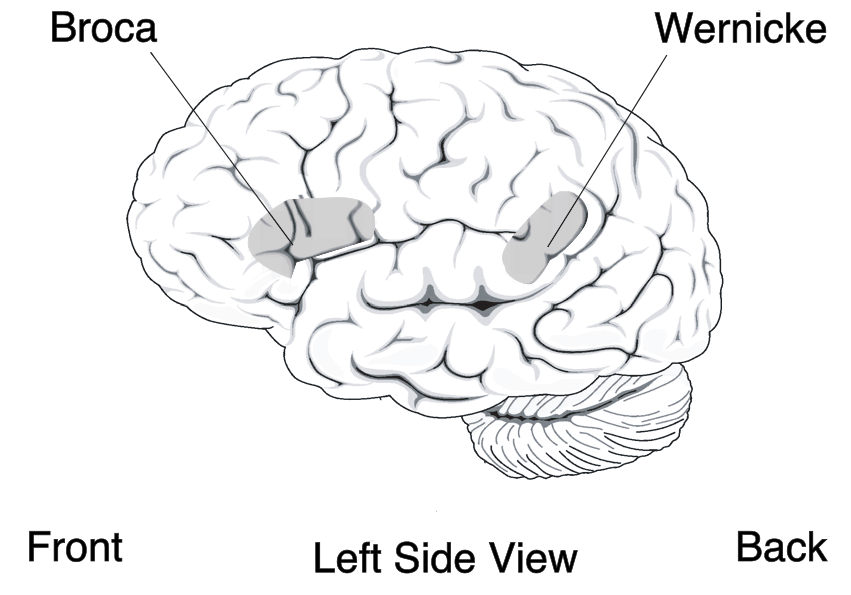

The comparison with language models has a clear boundary. Human language is connected to hearing, movement, memory and social life. A silent sentence may still carry the ghost of a voice and prepare a possible action. LLMs predict tokens; humans predict and act in a world.
Humans are not identical to language models because we are embodied. We suffer, become tired, form attachments and bear consequences. Some people have little inner speech and think mainly through images, music or bodily sensation. The point is not that thinking is only language. It is that language is often the interface through which thought becomes self-reflection.
An LLM is not our duplicate. It is one linguistic ability separated from the body, scaled up and made to speak back.
Prompted Selves

Language can describe reality, but it can also outrun it. That makes truth and lying possible. A mature person learns to make words answerable to evidence, compassion and consequence instead of mere fluency.
Human societies have always shaped the next available thought. Education, advertising, law and therapy all change what people are likely to notice or say. This is a kind of prompt engineering. Context does not determine us, but it matters. A crowd, a courtroom or a laboratory makes different sentences easier to utter.
Character is partly the set of prompts we have learned not to obey.
Do Not Outsource the Inner Voice

Each day, our inner language meets a new context: obligations, memories, moods and messages. A sentence can narrow a future or open one. “I need help,” “I was wrong” and “What should I test?” do not only describe a person; they offer different next moves.

LLMs can draft, summarize and offer alternatives. That can be valuable. The risk begins when they replace the friction through which a judgment becomes your own. A tool that always supplies the next sentence may make us more fluent but less careful.
Use a model as a mirror, not an oracle. Ask it for counterarguments, missing assumptions and evidence that would change your mind. Then decide for yourself.
The New Humiliation


Language models show that grammatical, impressive-sounding language can be generated statistically. That is a small humiliation, but a useful one. Fluency was never proof of wisdom.
Human dignity has to rest somewhere deeper: in responsibility, care, judgment and the willingness to bind words to reality. A machine can generate “I am sorry.” A person can repair harm. A machine can produce a claim of truth. A person can risk something to defend it.
LLMs do not prove that people are merely machines. They show that we are more linguistic, and more promptable, than we liked to believe. The lesson is not to distrust language. It is to train our inner voice well.
References
- Vaswani, Ashish et al. “Attention Is All You Need”, 2017.
- Vygotsky, Lev. “Thinking and Speaking”, 1934.
- Fedorenko, Evelina, Steven T. Piantadosi, and Edward A. F. Gibson. “Language is primarily a tool for communication rather than thought”, Nature, 2024.
- Bender, Emily M. et al. “On the Dangers of Stochastic Parrots”, FAccT, 2021.
- Huang, Lei et al. “A Survey on Hallucination in Large Language Models”, 2023.